
Fundamentals of Tactile Measurement Technology
Introduction
Tactile measurement technology is an essential component of modern manufacturing and quality control processes. Because it involves direct contact with the object being measured, it enables a high degree of accuracy and is therefore indispensable in various industries.
What is tactile measurement technology?
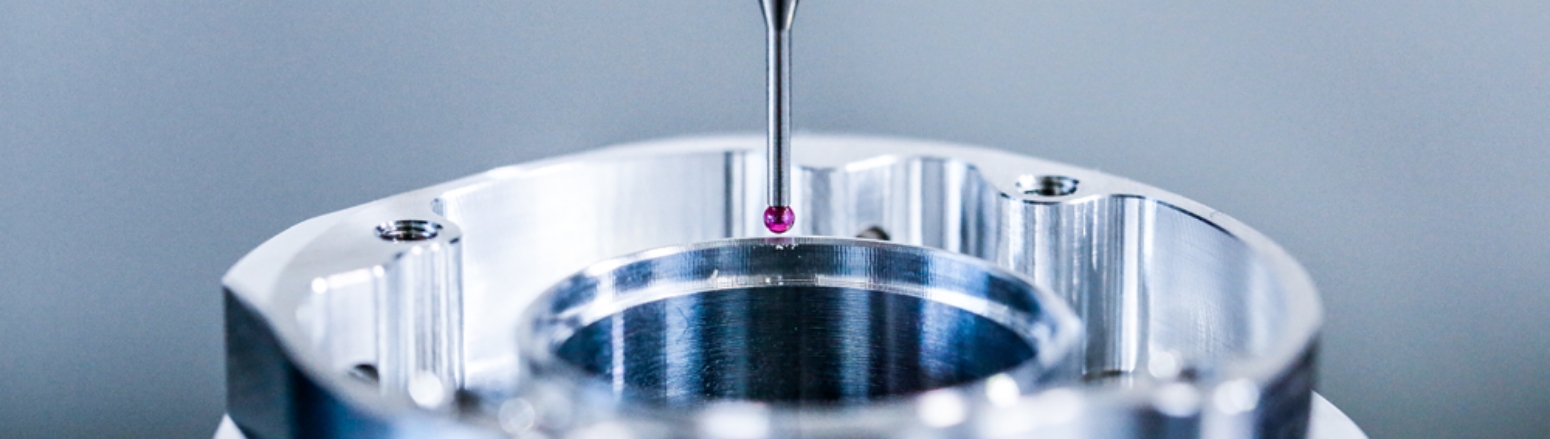
Tactile measurement technology, also known as contact measurement, uses physical contact to determine the dimensions of an object. This is typically achieved using probe tips or sensors mounted on a coordinate measuring machine (CMM) that are moved along the surface of the object.
How does tactile measurement work?
Probes or sensors touch specific points on the object’s surface. These contact points are then converted into digital data, which provides an accurate picture of the object’s mass and shape. Modern measuring devices can quickly capture a large number of data points, resulting in detailed and precise measurements.
Applications
Tactile measurement techniques are essential in a wide range of manufacturing and quality control processes. They are used to ensure compliance with precise specifications and tolerances during production. This technology is widely used in the measurement of complex shapes and surface structures where high accuracy is required. It is particularly valuable in areas where quality assurance and the precise verification of product dimensions are critical to performance and safety. Tactile measurement technology helps minimize errors, increase efficiency, and improve product quality across a wide range of manufacturing processes.
Advantages of Tactile Measurement Technology
- Accuracy: Tactile measurement technology is known for its exceptional measurement accuracy, which is often precise to the micrometer. This precision is crucial for applications in microelectronics, precision engineering, and other fields where the finest details are of the utmost importance. The ability to perform accurate measurements even on complex geometries makes it an indispensable tool in quality control.
- Versatility: Thanks to its flexibility in handling various materials and shapes, tactile measurement technology can be used in a wide range of industries. It is suitable for everything from soft plastics to hard metals and can be used for products of any size, from small microchips to large machine parts. This versatility allows companies to use a single measurement solution for a wide range of products.
- Reliability: Tactile measurement systems deliver consistent and repeatable results, which is essential for manufacturing products with tight tolerances. This reliability is particularly important in industries where even a single measurement error can lead to significant costs or safety risks. The robustness and repeatability of tactile measurement technology ensure that quality standards are consistently met.
The Future of Tactile Measurement Technology
As technology advances, tactile measurement systems are becoming increasingly sophisticated. The integration of automation and artificial intelligence promises even greater efficiency and precision.
Conclusion
Tactile measurement technology plays a central role in modern manufacturing and quality control. Its ability to provide accurate and reliable measurement data makes it an indispensable tool in many industries. For more information or to benefit from our expertise in tactile measurement technology, please contact us at Hanimann 3D-Messlabor AG.
We’d be happy to advise you!
We would be happy to provide you with personalized advice, with no obligation.
Please contact us.